From performing at New York City’s famed Metropolitan Opera House to managing supply chains for an international cosmetics company and improving their communities, Rutgers young alumni have used their education as a powerful launching pad.
Whether in the arts, health care, business, mental health, or criminal justice reform, these recent graduates said their Rutgers experience equipped them with the skills, networks and confidence to lead early in their careers.
Here are the success stories of five young alums.

Like every young singer, Amanda Batista had her eye on “the big art schools” as a teenager, auditioning for several before auditioning for Mason Gross School of the Arts. But after performing for the head of the vocal program, she knew immediately where she belonged.
“Eduardo Chama sat right next to me and my mom and said, ‘You have a career and a future, and I know exactly what we are going to do to get you there,’ ” Batista recalled. “I felt right from that moment this was a place where you could get individualized attention. That day I committed to Rutgers.”
It was a decision that set her directly on the path to achieving her ultimate dream: singing opera professionally.
“Rutgers was my first musical refuge,” she said. “I felt cared for and believed in.”
Raised in a working-class family in Manchester, N.J., Batista arrived at Rutgers with raw talent, but without formal vocal training or the ability to read music.
“I started in the most rudimentary levels of aural skills and music theory, because I had no prior foundation of musical education. Building this from scratch was so challenging and frustrating,” she said. “But it was one of the best things I dedicated myself to because it provided me with a rock-solid musical foundation. Now, I can teach myself anything.”
Rutgers was my first musical refuge. I felt cared for and believed in.
Amanda Batista
Operatic Soprano
That grounding served her well. After graduating from Rutgers in 2020 with a bachelor of music, Batista earned a master’s degree in vocal arts from The Julliard School in 2022 as a Kovner Fellowship recipient, which covered her full tuition. She then trained with the prestigious Lindemann Young Artist Development Program at the Metropolitan Opera before launching her professional career as an operatic soprano.
Today, the 28-year-old is based in Manhattan and travels nationwide to perform with premier opera companies from Seattle to New York, including The Metropolitan Opera where she made her debut in 2023’s Aida. Her performances have earned critical acclaim and industry honors, including the 2025 Hildegard Behrens Foundation Award and the 2026 Mildred May Award.
“I’m still at the infancy of my career, and there’s still so much work left to do,” she said. “My goalposts keep moving, and I'm constantly chasing them—always striving to catch up to my own potential. As long as I’m singing with my heart, as my first teacher Eduardo Chama always told me to do, I feel I’m on the right track.”

At age 16, Dhvani Shah got her first introduction to supply chain management during a summer camp hosted by Rutgers Business School.
“That camp is the reason why I picked Rutgers. It helped me understand how much I could do with a degree in business,” said Shah, 27. “When I was applying, supply chain was just emerging as a major field. Then the pandemic hit, and suddenly everyone recognized that supply chain was the place to be.”
A decade later, Shah continues to put her Rutgers Bachelor's degree in supply chain management to work as a Sales and Operations Planning Manager for global beauty leader L’Oreal.
Rutgers taught me to get out of my comfort zone. You learn to make it as big or small as you need it to be. That prepared me for the business world.
Dhvani Shah
Sales and operations planning manager at L’Oréal
Shah credits the professional network she built and internships she landed at UPS and Reckitt while at Rutgers with launching her career. Within a year of earning her degree, she was hired at L’Oréal, where she has steadily advanced ever since.
“Rutgers taught me to get out of my comfort zone. It’s such a big school.
You learn to make it as big or small as you need it to be," said Shah, who helps oversee sales and operations planning for the eye category within L'Oréal's Consumer Products division, based at the company's Operations headquarters in Clark, N.J.
“That prepared me for the business world. Now, whether I’m in a big setting at work or one-on-one, I know I can handle it.”
Reflecting on her early career success, Shah said she feels fortunate to be in a role that challenges her while remaining rooted in Central Jersey.
“There are so many avenues you can take from the business school—pharma, fashion and the beauty world, and all those big companies are in New York, New Jersey and Philadelphia,” said Shah, who was raised in Hillsborough and now lives in Hopewell with her husband Rushi Shukla, a fellow Rutgers alumnus. “Ten years out from my initial journey, I’m still living in the same area with the same people I grew up with and secure in my career. I would say I owe that to Rutgers.”

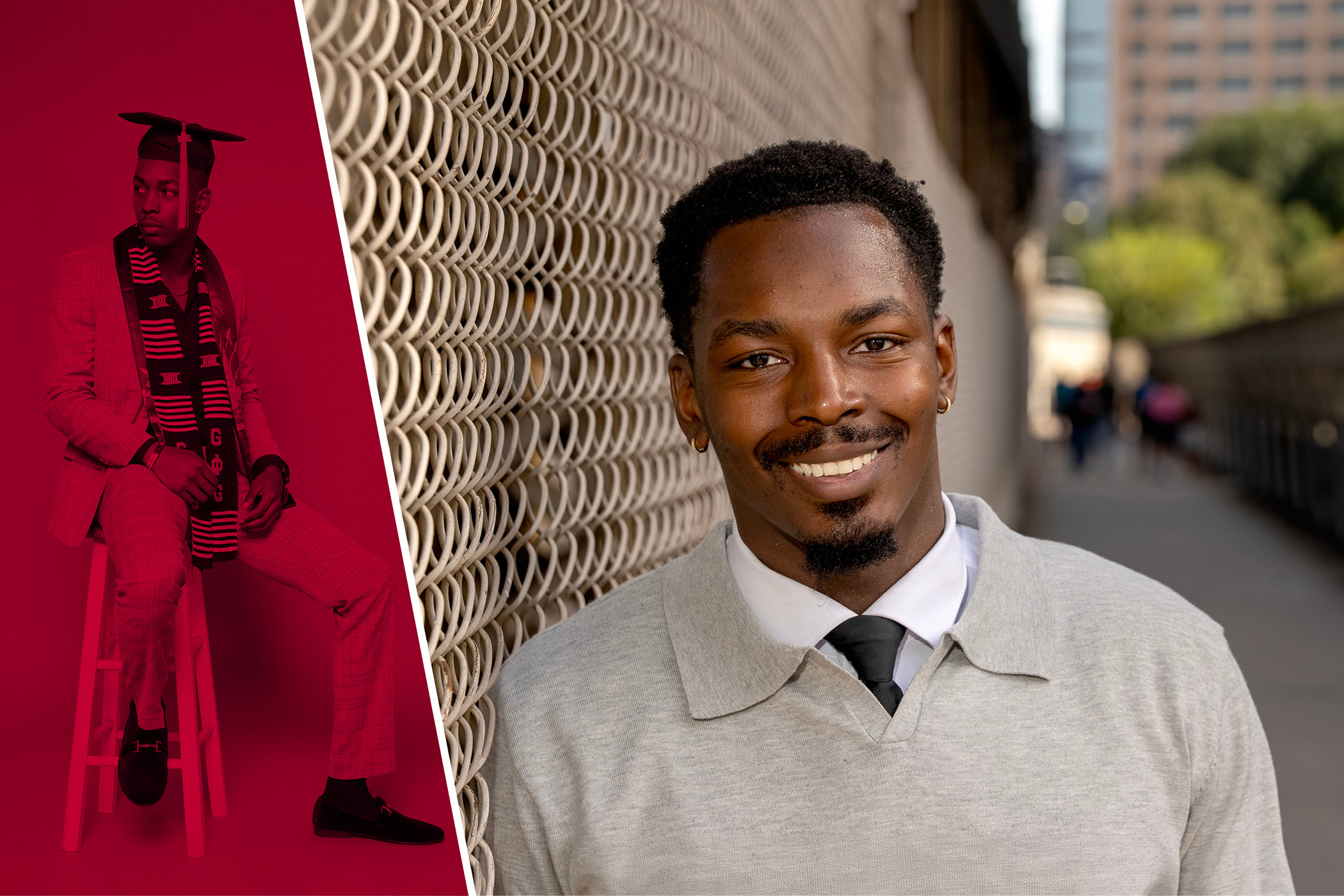
Growing up in Elizabeth, N.J., Theodore Dieujuste watched friends and neighbors get caught up in the criminal justice system—often over drug or gun charges or gang-related connections.
Driven to advocate for those in his community, he enrolled at the Rutgers University–Newark School of Criminal Justice.
“A lot of people being incarcerated get stigmatized. Those were my friends,” he said. “I wanted to be the person who could make a difference by being a voice for them.”
Dieujuste originally planned to pursue law. But through campus leadership—including the debate team, Black Organization of Students and Groove Phi Groove Social Fellowship, Inc.—and internships with Braven and Newark Community Solutions, a new path emerged: restorative justice.
Without Rutgers, I wouldn’t have had a lot of the opportunities that came from the connections I made there.
Theodore Dieujuste
Training coordinator, CASES (Center for Alternative Sentencing and Employment Services)
While he’d learned about the concept of restorative justice at Rutgers, he didn’t see it in practice until he worked with Newark Community Solutions’ alternative incarceration program, which connects people experiencing low-level nonviolent offenses to social services.
“That’s when it hit me—this is the type of program I can do good, impactful work with,” said Dieujuste, who earned both bachelor’s and master’s degrees in criminal justice.
Today, Dieujuste is a criminal justice training coordinator at CASES (Center for Alternative Sentencing and Employment Services), a New York City non-profit supporting individuals with past justice involvement or behavioral health needs.
“The people I am training are fresh out of the system, passionate about the work, and have something in their past that makes them credible to the community,” he said. “I develop and present mental health trainings and crisis prevention to our credible messengers to make sure they are prepared for what they will encounter.”
Dieujuste credits his Rutgers experience—both in and out of the classroom—with preparing him for his career. He believes serving as a club leader honed his supervisory skills, while a tutoring work-study role built his confidence as an educator.
“Without Rutgers, I wouldn’t have had the degrees and a lot of the opportunities that came from the connections I made there,” he said. “I do want to go back and eventually become a professor. I want to make real, lasting impacts in the criminal justice system.”

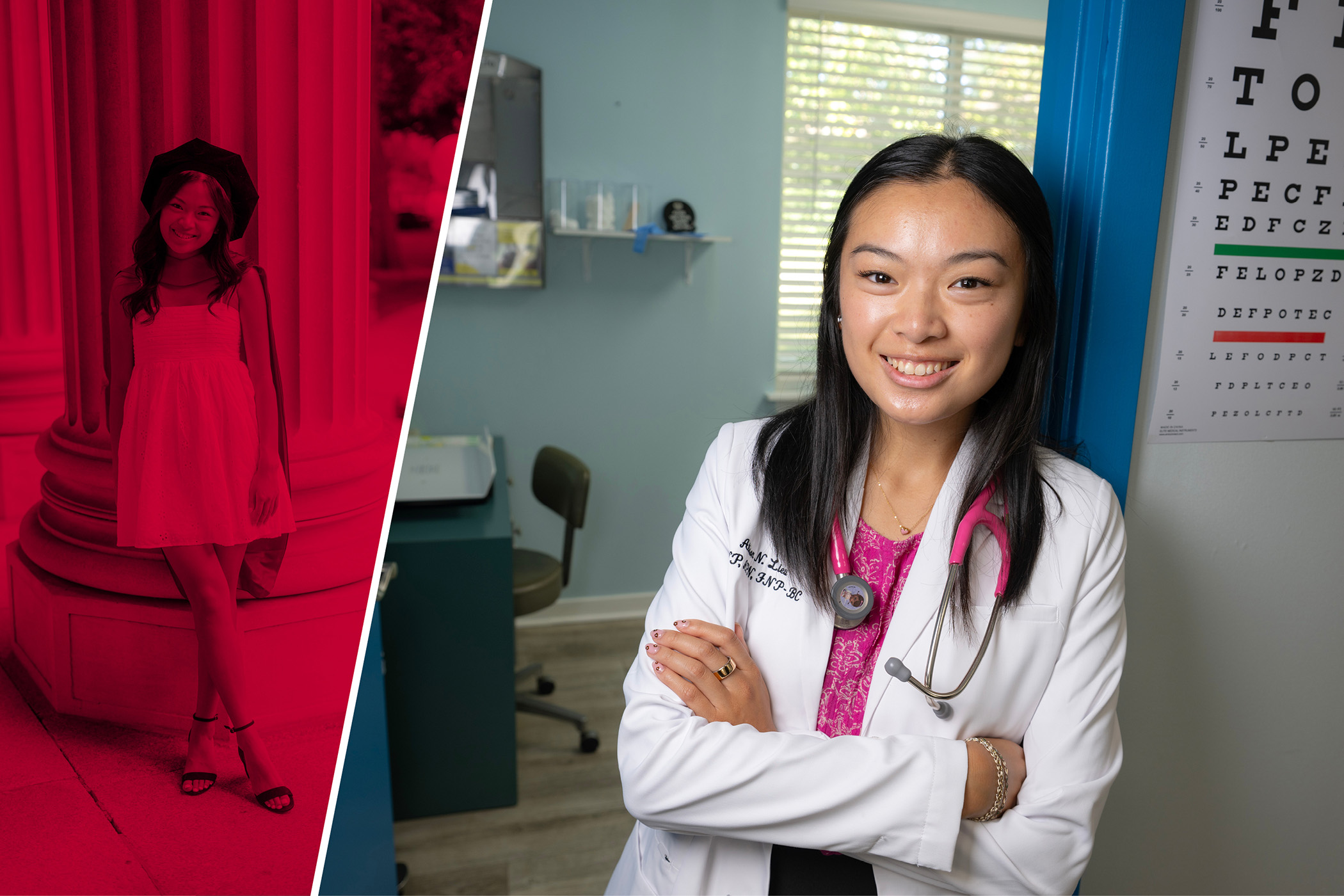
As a teenager, a memorable experience with a pediatric nurse practitioner made a lasting impression on Alison Lieu. “Previously, I had only seen the doctor,’’ Lieu said, recalling the moment when a nurse practitioner, who was a young woman walked in the room during the visit.
“I felt like I could talk with her more easily, open up and be more involved with my own health,” said Lieu, 26. “It inspired me to want to create that feeling in others.”
Lieu’s journey came full circle last year when she was hired as a pediatric nurse practitioner after earning both her bachelor of science in nursing and doctor of nursing practice degrees from the Rutgers School of Nursing–Camden.
For the South Jersey resident, commuting to Camden made financial sense. When her mom experienced a period of unemployment, Lieu qualified for Bridging the Gap program, which significantly reduced her tuition costs.
I would recommend Rutgers-Camden School of Nursing to others, especially those looking to advance their practice and widen their scope.
Alison Lieu
Pediatric nurse practitioner with Advocare Promenade Pediatrics
While Lieu initially planned to work in the field for a few years before pursuing graduate studies, an invitation from the nursing honor society, Sigma Theta Tau, sparked her interest in transitioning directly into the DNP program.
“I was fortunate in my clinical rotations to gain experience across adult care, pediatrics, and women’s health, which gave me a taste of everything,” Lieu said. “I would recommend Rutgers-Camden School of Nursing to others, especially those looking to advance their practice and widen their scope.”
After nearly a decade of completing her education, Lieu is enjoying her role working directly with young patients—though she constantly keeps an eye on the future.
“I plan to teach down the line, which is another reason why the DNP program worked out so well, because it would give me the ability to do so,” she said.
One day, she envisions returning to Rutgers—this time as a professor—and teaching the next generation of nurses.
“If they will have me back,” she said.

The field of psychology is vast, offering a dizzying array of degree programs and career paths. Taking too long to find your niche can prove both time-consuming and costly.
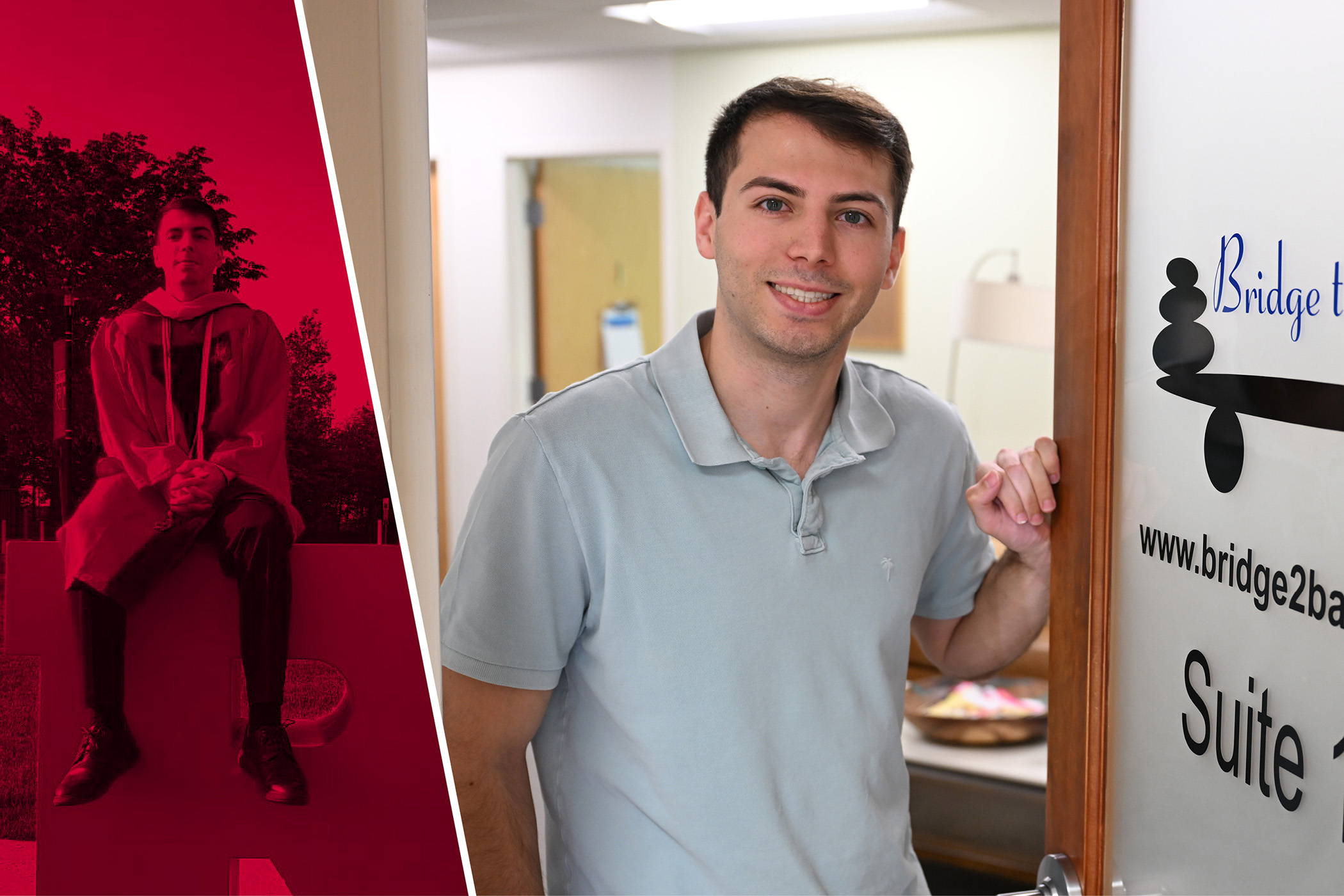
For Alex Glinskiy, enrolling at Rutgers made all the difference. Its accelerated dual-degree program—paired with a strong network of professors and peers—helped him map out his path early.
“Access to resources is a big part of it. You don't know what you don't know,” said Glinskiy, 26, of Princeton. “The alumni and professors inform you about opportunities you otherwise wouldn't have known existed.”
As soon as I had my license, I had interviews every day, multiple times a day.
Alex Glinskiy
Licensed Associate Counselor at Bridge To Balance Inc.
That guidance enabled Glinskiy to lock down two Rutgers degrees—a Bachelor's in psychology, Master of applied psychology, plus 18 credits from the School of Health Professions—and complete his required clinical hours in a little over six years. Upon passing the National Counselor Exam and earning his licensed associate counselor (LAC) credential, he immediately found himself in high demand.
“As soon as I had my license, I had interviews every day, multiple times a day,” he said. “A lot of the stigma around therapy is shrinking, and our diagnostic tools are always improving. I think there are only 11,000 counselors in New Jersey, that’s not that many. There will always be clients who need help.”
Glinskiy quickly joined Bridge To Balance Inc. in Hamilton, N.J., as an LAC. The role allows him to deliver clinical services while accumulating the 4,500 supervised hours required to earn his licensed professional counselor (LPC) designation.
“It's close to home, my supervisor provides great support without micromanaging, and I have access to ongoing training,” Glinskiy said. “I also have the flexibility to focus on the client populations and diagnoses I feel most passionate about treating. To me, that autonomy is a true measure of success.”