Why Today’s Cannabis Is Dangerous for Developing Brains
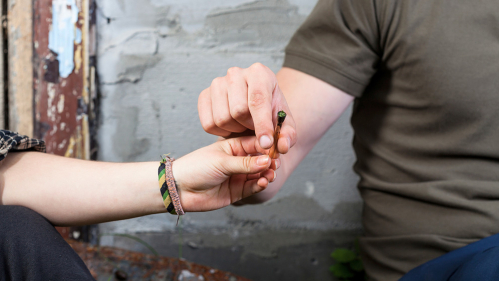
A Rutgers Health physician shares facts about marijuana she says parents of teens and people under 25 need to know
It has been five years since New York and New Jersey legalized recreational marijuana use for people who are 21 and older.
Despite widespread public support, there is still concern from health professionals about the risks of addiction and other issues, such as intellectual impairment and poor performance in school or at work. The risks may be particularly high in people under age 25 – and more education is needed, said Jill M. Williams, a professor in the Department of Psychiatry and the director of the Division of Addiction Psychiatry at Rutgers Robert Wood Johnson Medical School.
Williams said regular cannabis use has been linked to the development or worsening of several mental health conditions, including depression, anxiety, suicidal thoughts and psychosis. She discusses the risks associated with use, how cannabis products have increased in potency and what parents can do to help their children.
Who is at risk?
Several factors seem to be associated with a higher risk of developing problems related to cannabis use. One of these is age. Starting cannabis at an early age puts someone at higher risk for addiction as well as other consequences. Since the brain is not fully developed until about the age of 25, there is concern about how cannabis, as well as any other substance, can affect these processes of brain maturation.
Since the brain is not fully developed until about the age of 25, there is concern about how cannabis, as well as any other substance, can affect these processes of brain maturation.
Jill M. Williams
Professor, Department of Psychiatry and Director, Division of Addiction Psychiatry, Rutgers Robert Wood Johnso
The frequency of cannabis use is also a factor. Daily or near daily use of cannabis greatly increases the chances of negative consequences. Young people who use cannabis daily or near daily can have a 25% to 50% rate of cannabis use disorder.
Another important factor is the THC, or tetrahydrocannabinol, potency of the product which is discussed below.
What is different about the cannabis used today?
Cannabis has changed in recent decades. The concentration of d-9THC, the main psychoactive component, has increased from about 4% in the 1990s to at least 25% today. Contemporary growing and manufacturing methods have made it easier to change the potency of the plants.
In addition, if people vape it or use other highly concentrated forms like waxes, the THC can be as high as 80% or 90% of the content. The THC content is associated with greater risk – the higher the content, the higher the risk, not only for addiction, but also for negative neuropsychiatric effects like psychosis.
Edibles can have a delayed onset and long-lasting effect over many hours that can sometimes cause people to ingest too much. Products that are marketed to look like candy are attractive to children and may result in accidental ingestion.
What concerns, other than addiction, should younger users be aware of?
The health hazards of cannabis use are still being studied. Smoking cannabis is linked to higher risk of cardiovascular disease. There is also concern that regular use can result in a decrease in intellectual ability and decreased educational and job success.
What are the risk factors of THC induced psychosis?
Risk factors include frequent use, potency or higher THC content and starting to use cannabis at an earlier age. If someone in the family has a history of having a psychotic illness like schizophrenia, the risk is also much greater.
Symptoms of psychosis can be quite troubling and include loss of reality such as having false beliefs or hallucinatory experiences. Some drugs including THC in cannabis can cause psychosis to occur.
If a parent suspects their child might be addicted to cannabis or in danger of developing a severe mental disorder, where can they go for help?
Talk to a behavioral health care professional, someone with training and experience in helping people with addictions.
Some people can improve in days to weeks of stopping cannabis use, but some may require medications or their treatments. Cannabis withdrawal symptoms, including sleep and mood changes, can be uncomfortable and cause people to relapse or go back to using cannabis.
More efforts are needed to educate the public about the risks of cannabis use and how to help a friend or family member that is struggling.


