At White Coat Ceremony, a Drive to Help Others Inspires Students in Med School Journey

At New Jersey Medical School, 176 students donned their white coats for the first time in annual rite of passage
The first time Nabil Boto discovered where he belonged was in the back of an ambulance.
In March 2020, after he was forced to withdraw from college and undergo surgery to correct a curvature of his spine, which required nearly a year to recovery, he began working as a volunteer first aid squad member in Highland Park during the COVID-19 pandemic.
“I really loved what I was doing” said Boto, a first-generation American from Cuban and Moroccan parents who grew up in a multi-cultural community in Edison. “I felt like I belonged here.”
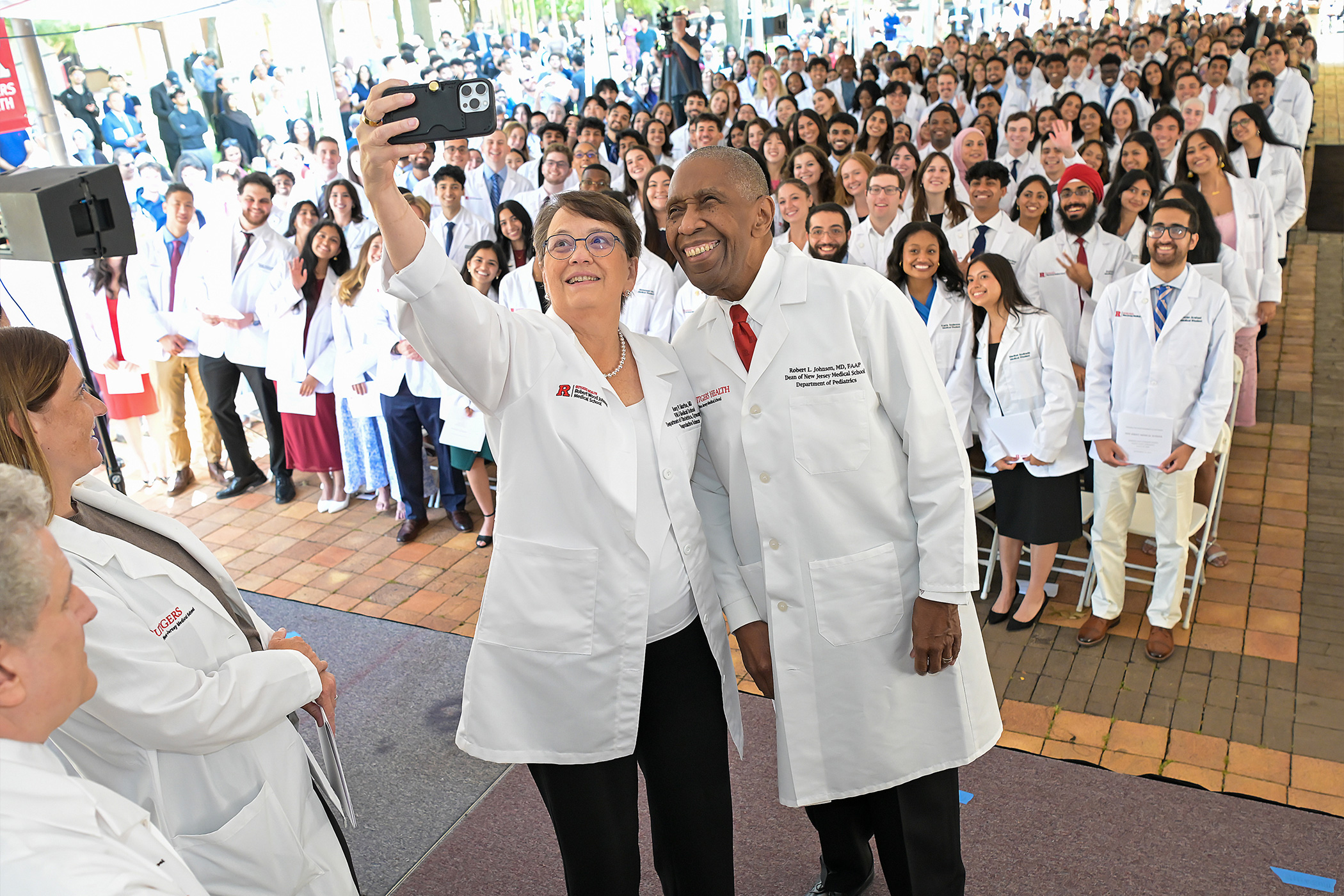
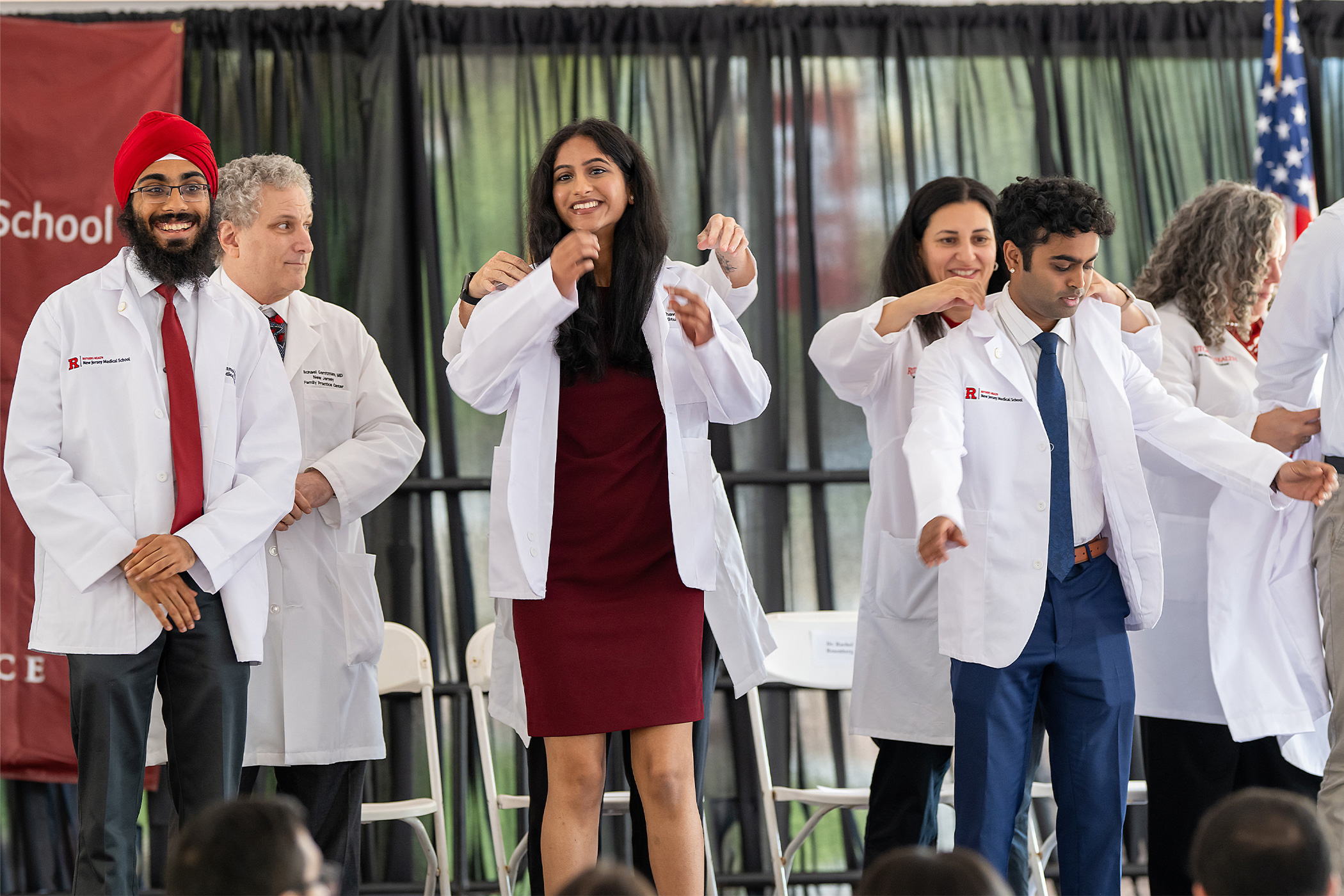
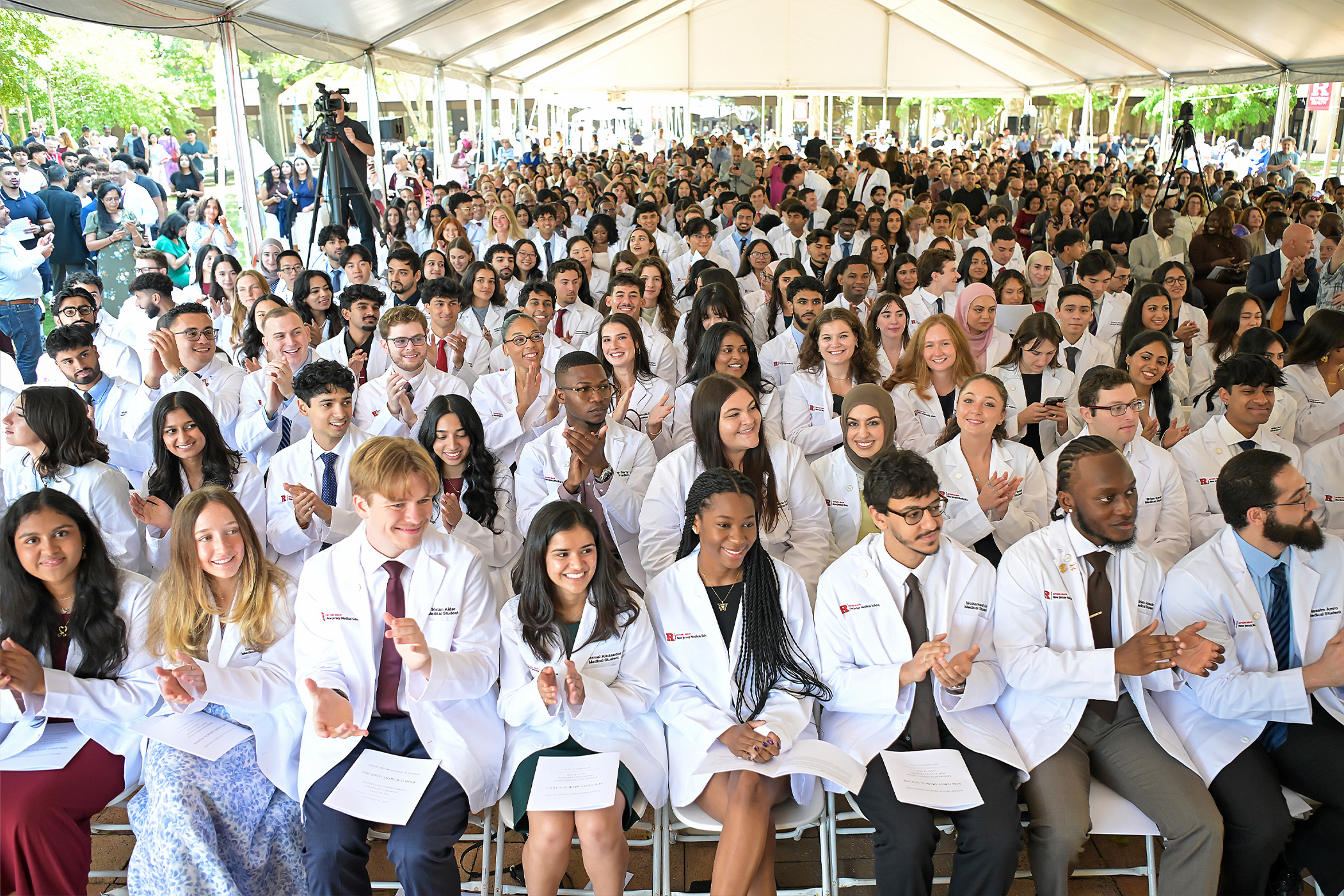
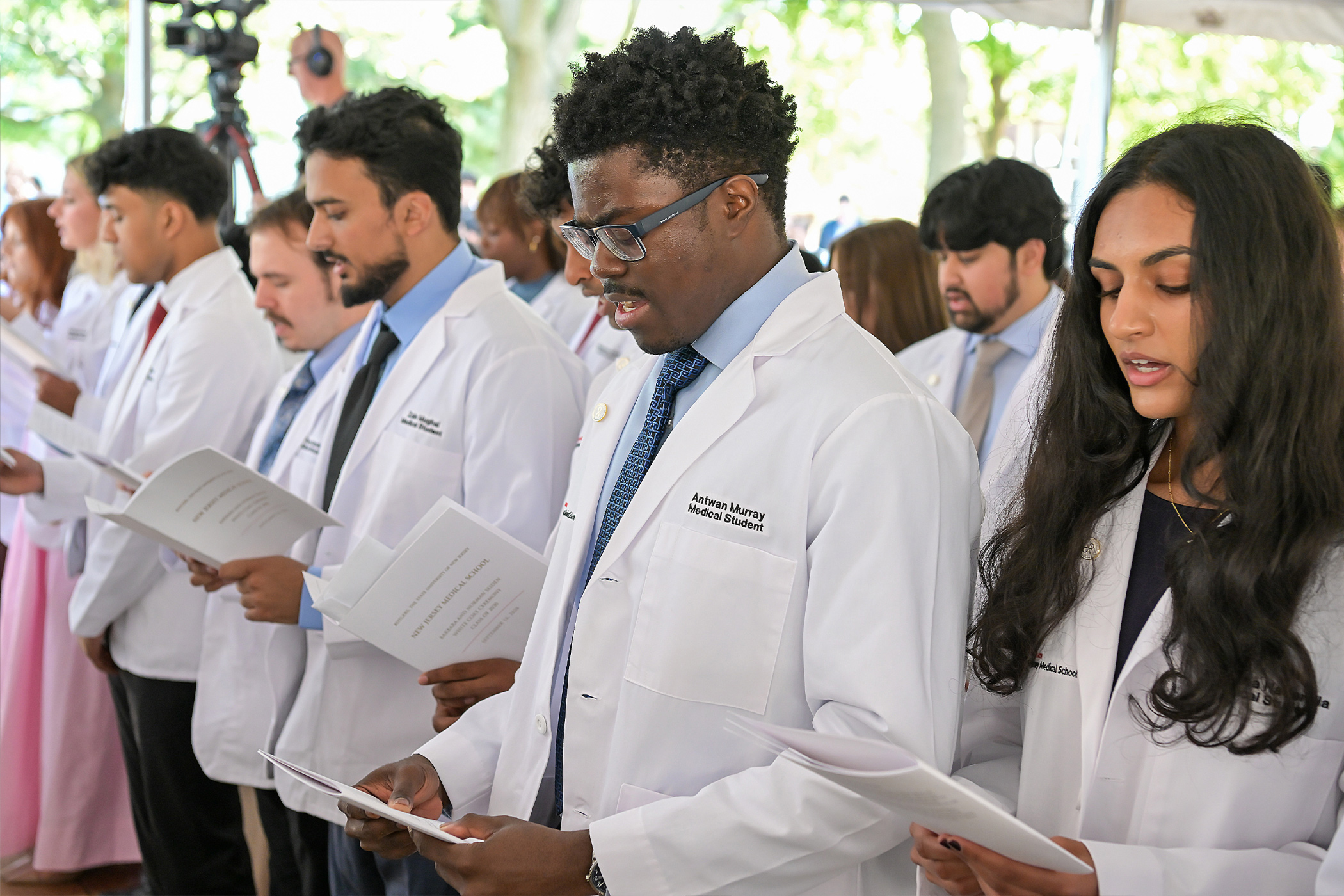
Six years later, Boto became a member of the Class of 2030 at Rutgers New Jersey Medical School. He joined 175 classmates on Sept. 16 participating in the annual Barbara and Norman Seiden White Coat Ceremony. In 1994 New Jersey Medical School became the second medical school in the nation to host the ceremony, when medical students don their white coats for the first time.
“As I look into the audience, I not only see aspiring medical students, but I also see hope, tenacity, determination, optimism, curiosity, and an unwavering commitment to excellence,” Robert L. Johnson, dean of Rutgers New Jersey Medical School and interim chancellor of Rutgers Health, told the incoming class during the ceremony “These are the qualities that will not only make you great students, but even greater physicians.”

For Boto, 27, receiving the coat represented another milestone in a journey that has already included years of caring for patients.
After joining the first aid squad, he trained as an EMT and worked in the Bronx and Irvington. A scholarship from RWJBarnabas Health enabled him to complete paramedic school in 14 months. He started working as a paramedic for University Hospital in Newark in 2022, a job that made him realize he wanted to become a physician and serve the city’s culturally diverse community.
Boto came to Rutgers in 2023 to finish his undergraduate education. He is part of a seven-year BA/MD program that will allow him to take one year of medical school courses before receiving his undergraduate degree. This makes it possible for Boto—who is on his way to becoming the first physician in his family—to receive his medical degree in seven years instead of eight.
Wearing the white coat, represents “a commitment to being a lifelong student,” as well as serving his community, he said.
“My dream is actually to stay in Newark,” Boto said. “It’s like a melting pot of culture.”
For Carter Hohl, the route to medicine began in a very different place.
Hohl, who recently turned 30, received his undergraduate degree in business in 2019 and went on to work at J.P. Morgan before moving into business development in institutional cryptocurrency. But professional success eventually gave way to larger questions about whether his career aligned with his values and the kind of impact he wanted to have on others.
His grandfather’s sudden death brought those issues into sharper focus. So did his involvement with Lime Connect, an international organization supporting students and professionals with disabilities. Hohl wants to improve the understanding of neurodiversity and help others receive the support they need.
“I’m very fortunate to be in a position where I can look back on my own life and see if I can help other people the same way other people helped me,” he said.
Hohl is interested in practicing pediatric psychiatry but remains open to where his medical education may lead.
The white coat, he said, conveys responsibility, not status.
“I think the white coat should be worn with humility and with the constant reminder of what you’re here for,” Hohl said. “You’re not here for prestige and glory. You’re here to really help people.”
Hohl’s commitment to service is shared by classmate Laila Gad, 24, whose path to medicine brought together journalism, environmental science and public health.

Gad grew up in Staten Island’s Egyptian community and in 2024 received an undergraduate degree in journalism and a minor in environmental science before earning a master’s in public health.
During the COVID-19 pandemic she provided assistance to older adults and realized that aside from volunteers like herself who deliver meals and provide some companionship, the only people elderly individuals connected with regularly were physicians.
“I saw how important their doctors were to them,” said Gad. “Making that individual connection is so very important.”
Gad’s environmental studies background and her research into heat-wave exposure and other environmental health issues led her to explore the relationship between climate and health.
She hopes to combine primary care with environmental health, examining how extreme heat, flooding and other weather events affect patients and helping communities better understand those risks.
The ceremony was particularly meaningful for Gad’s family. Her parents watched as the first member of their family on the path to becoming a physician received her first white coat.
“I’m the first one in my family with this honor so it is really special,” she said.
Her classmate Jalissa Mitchell said receiving the coat represents the realization of a goal she had mapped out years earlier.

Mitchell, 32, grew up in Union County and is the first in her family to pursue bachelor’s, master’s and medical degrees. Without physicians or mentors in her immediate circle, becoming a doctor once seemed outside the realm of possibility.
“I never really thought it was for me because I never saw anybody who looked like me,” Mitchell said. “I didn’t even know that the medical school was this close to where my parents grew up.”
Her parents, who were born in Newark, experienced poverty before building a life for their family. Mitchell credits their work ethic, along with her grandmother’s love of education, for shaping her ambitions. Her grandmother returned to college after raising six children and earned a degree in early childhood education.
During the pandemic, Mitchell, who earned a master’s degree in biomedical science, worked two full-time medical laboratory science jobs, supporting COVID testing, blood banks and immunohematology. She spent two years teaching immunohematology and microbiology at Raritan Valley Community College, where she helped establish a medical laboratory science program.
A physician she met while working at Robert Wood Johnson Medical Center encouraged her to consider medicine. She is interested in surgery and is committed to practicing medicine in Newark.
“My parents fought to get out of poverty to leave Newark,” she said. “And I want to go back to help.”
Her parents, grandparents, relatives and friends were there as she reached the milestone she had spent years working toward.
“It’s very emotional because I had a five-year plan of getting here, and now I’m here,” Mitchell said. “It signifies a lot of the promise and just another step forward into me being the physician that I want to be.”

Amy P. Murtha, dean of Rutgers Robert Wood Johnson Medical School and founding dean of the future Rutgers School of Medicine, pending accreditation from the Liaison Committee on Medical Education, stressed the connection between the two medical schools.
“Every White Coat Ceremony is an opportunity to celebrate the next generation of physicians and the promise they bring to the future of medicine,” Murtha said. “These first-year students are beginning a journey that will require curiosity, resilience, humility and a commitment to lifelong learning.”
Murtha said what makes the moment so important is seeing what students will ultimately do with their education and the relationships they form along the way.
“They will have the opportunity to make a lasting difference in the lives of their patients and communities,” she said.
Johnson encouraged the students to view the ceremony not only as an achievement but also as the beginning of what comes next.
“I encourage you to never stop learning and to think of today as a new chapter and an opportunity to grow, learn, and embrace the endless possibilities that lie ahead,” Johnson said. “As you don your white coats, let it be a gentle reminder of your purpose, potential, and extraordinary talent. Congratulations, Class of 2030.”