Understanding Gynecologic Cancer: What Women Should Know
Rutgers specialists share insights on the disease, prevention, early detection and collaborative care
Gynecologic cancer continues to affect thousands of people, with 117,600 new cases projected in the United States this year, according to the American Cancer Society.
Experts at Rutgers New Jersey Medical School and University Hospital note the estimate underscores the importance of awareness, prevention and early detection, which can play a critical role in improving health outcomes.
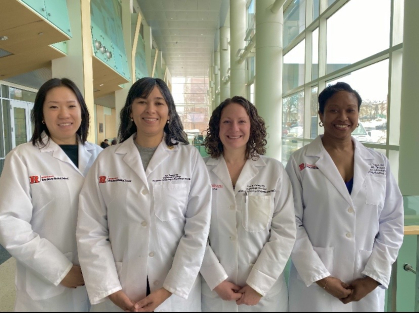
This team of gynecologic specialists – Ana Tergas, Lisa Gabor, Nancy Zhou and Udele Tagoe – brings together clinical expertise, research and commitment to patient-centered care, working collaboratively to address the needs of women throughout diagnosis and treatment in the greater Newark area. Together, in collaboration with Rutgers Cancer Institute, the state’s only National Cancer Institute–designated Comprehensive Cancer Center, they offer a team-based approach that connects specialized knowledge and individualized care.
Members of the team discuss gynecologic cancers, symptoms women may overlook and the importance of early detection.
How do the five main gynecologic cancers – uterine, cervical, ovarian, vaginal and vulvar – differ in terms of symptoms, risk factors and treatment?
Gabor: Gynecologic cancers have overlapping symptoms and risk factors. Increasing age is a risk factor across the board, while smoking is particularly associated with cervical and vulvar cancers.
Uterine and ovarian cancers can be linked to hereditary cancer syndromes, such as hereditary breast and ovarian cancer and Lynch syndrome, so personal and family histories of cancer may increase risk.
Human papillomavirus infection is particularly important in the development of cervical, vulvar and vaginal cancers. These cancers can all present with abnormal vaginal or postmenopausal bleeding.
Ovarian cancer has notoriously vague symptoms, including abdominal distention or bloating, changes in weight or appetite and abdominal or pelvic pain. Treatment may involve surgery, chemotherapy and radiation with the goal of maximizing success while minimizing side effects.
What are some gynecologic cancer symptoms that women might overlook?
Tergas: Since many symptoms of gynecologic cancers overlap with benign conditions, they may be overlooked.
Any bleeding after menopause warrants prompt investigation. Changes in menstrual patterns, especially heavy or uncontrolled bleeding, should also be evaluated. Persistent irritation, nonhealing wounds or ulcers of the vagina or vulva – especially when symptoms do not improve with treatment – require a thorough exam and possible biopsy.
Ovarian cancer symptoms may include bloating, decreased appetite, fatigue and weight loss, especially with a family history of cancer.
Cervical cancer is the only gynecologic cancer with a routine screening test. What can women do to remain proactive about their health?
Tagoe: High-risk human papillomavirus infection causes more than 90% of cervical cancers. While most young, healthy individuals clear the virus spontaneously, persistent infection can cause precancerous changes that may progress into cervical cancer.
Since HPV usually causes no symptoms, screening is an important tool in prevention. The Pap and high-risk human papillomavirus tests identify precancerous changes of the cervix. Women should discuss the appropriate screening strategy with their health care provider. The HPV vaccine protects against types responsible for most cervical cancers.
Most importantly, stay up to date with screening and follow up on abnormal results. Cervical cancer is highly preventable when HPV vaccination, screening and timely treatment of precancerous changes are combined.
How can early detection make a significant difference in treatment options?
Zhou: Routine cervical cancer screening can detect precancerous changes, which can often be monitored or treated before they develop into cancer. Early detection expands treatment options.
Treating precancerous changes is important for prevention and preserving fertility. Treatment can often be limited to removing the abnormal area while preserving the uterus and fertility.
Women should not wait for symptoms to seek screening, because precancer and early cervical cancer may not cause symptoms. Staying up to date with screening and promptly following up on abnormal results can make a meaningful difference in prevention and treatment.
How are Rutgers Cancer Institute and University Hospital advancing research, treatment and patient care in gynecologic oncology?
Tergas: At Rutgers and University Hospital, women facing gynecologic cancers have access to an academic medical center with experienced specialists that work collaboratively with the state’s only National Cancer Institute-designated Comprehensive Cancer Center – Rutgers Cancer Institute. right in their community. Our gynecologic oncologists provide full-spectrum care, including robotic and minimally invasive surgery, radical debulking surgery, chemotherapy and the latest targeted therapies.
We work within a multidisciplinary team to develop a coordinated plan tailored to each patient, who may also access clinical trials of promising new therapies.
Our goal is to care for the whole person by pairing expert medical treatment with supportive services such as nutrition and rehabilitation, fertility preservation counseling, palliative care and emotional and social support.
What is one message you would like women to take away about gynecologic cancer?
Zhou: Do not wait. Pay close attention to your body and act on what it tells you.
Many gynecologic cancers can be prevented or caught early, when they are most treatable, but only if women stay up to date on preventive care and seek care for symptoms that are new, persistent or unusual.
Early action can save lives.


