At Rutgers, a Forest Takes Root Where a Road Once Ran

A tree-planting initiative brings hundreds together to transform underused campus land into a fast-growing native ecosystem
On a patch of Livingston campus once covered in asphalt, Rutgers University-New Brunswick students are planting the beginnings of a forest, one designed not just to grow quickly but to bring people into the work of reforestation.

The transformation is part of the Livingston Abandoned Roadway Environmental Restoration project, which replaces an obsolete roadway dating back to the Camp Kilmer World War II staging ground with a dense planting of native species using the Miyawaki method, a fast-growing approach to reforestation that rebuilds soil and layers vegetation to accelerate natural growth.
But the project is about more than ecology.
“This is as much about people as it is about trees,” said Josh Kover, a graduate student in landscape architecture who designed the forest as part of his honors thesis and has helped lead the effort. “We’re thinking about how to build a culture of stewardship, how to make environmental work something that feels accessible, communal and lasting.”
Kover spent more than a year designing the site alongside faculty and university partners, including Jason Grabosky, a professor in the Rutgers Urban Forestry Program, working to recreate the complexity of a natural ecosystem in a highly managed environment.
“We’re trying to design a system that works like a natural forest from day one, instead of waiting decades for it to get there,” Kover said. “The goal was to create something that’s not just planted, but functional, something that can sustain itself over time.”
That meant rebuilding the soil, carefully selecting native species and planting densely across layers, from canopy trees to shrubs to groundcover, to create the conditions for a self-sustaining system.
The project is supported by a New Jersey Department of Environmental Protection stormwater grant funded through the Federal American Rescue Plan Act. The concept was developed by Brian Clemson, the university’s landscape architect, who serves as principal investigator of the project. He worked with staff in Rutgers Institutional Planning and Operations and faculty to shape the site not only as a stormwater solution, but as a living lab for teaching, research and environmental restoration.
“This is a significant and unique opportunity,” said Clemson. “The roadway had been abandoned for decades. It is almost a once in a lifetime professional career opportunity."
This will enable current and future students and researchers an opportunity to study how forests, forest ecosystems and forest soils form and evolve.
Brian Clemson
The project reflects a broader shift in how institutions think about land use.
“It’s rare to see a place decide a roadway is no longer necessary and even rarer to turn it into something that functions as an environmental asset,” Kover said. “It’s already a model for what you can do with old transportation corridors when they’re no longer in use.”
The Miyawaki method, developed in Japan, has gained traction globally as communities look for ways to restore green space quickly. In New Jersey, a small but increasing number of sites have adopted the approach, though the practice remains relatively new in the United States.
Kover said the method is widely used but still being studied. Even so, he said, the growing interest has value.
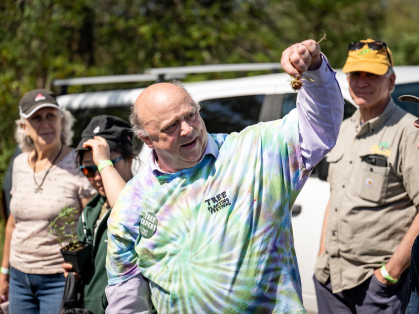
“People are still doing the right things, planting native species, thinking about soil, thinking about systems,” he said. “And that’s a big step in the right direction.”
At Rutgers, the site will serve as a living lab. Researchers plan to study soil microbes, plant competition and long-term forest health, helping build a clearer understanding of how dense, fast-growing forests develop.
“This gives us a chance to answer some of those open questions while the forest is actually developing,” Kover said. “It’s not just a planting. It’s something we’ll be able to study for years.”
For Kover, the science is only half the story.
“The environmental benefits matter, but they don’t go very far if people don’t feel connected to them,” he said. “If no one knows about a project like this, it doesn’t reach its full potential.”
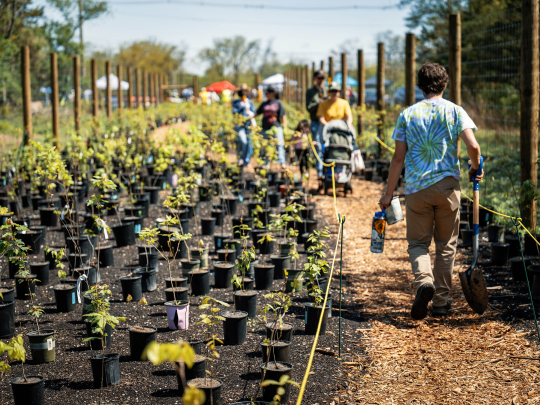
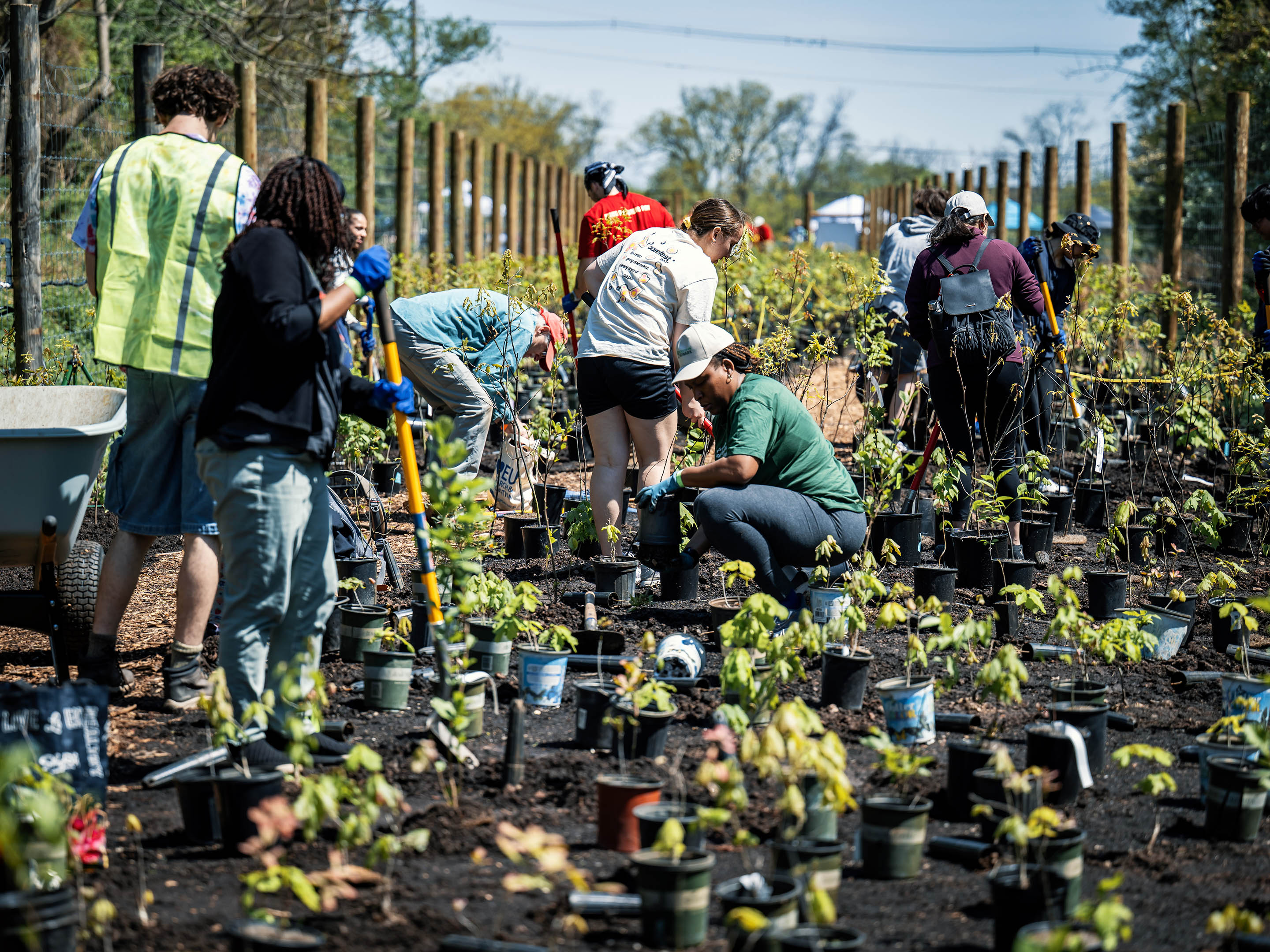
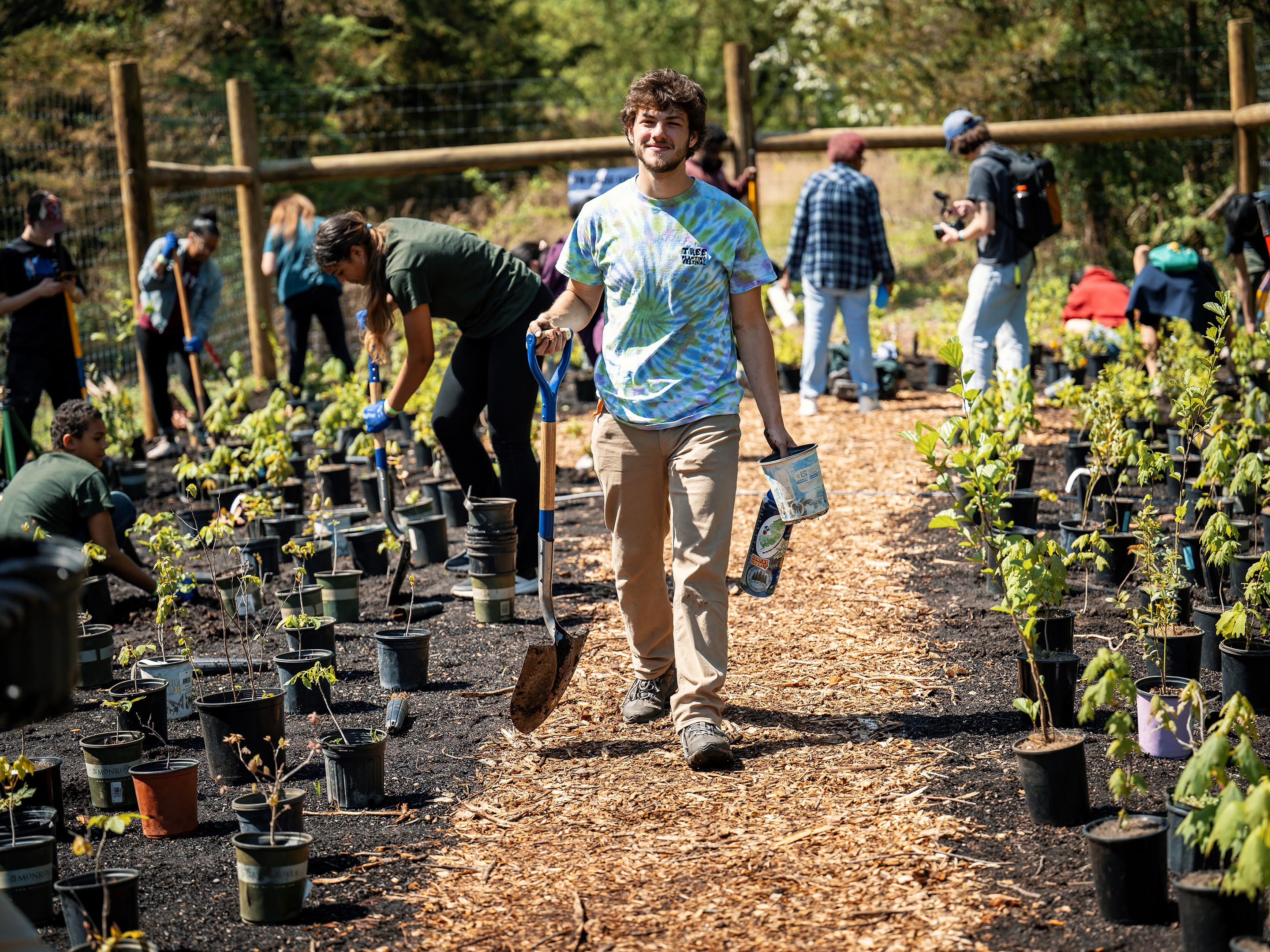
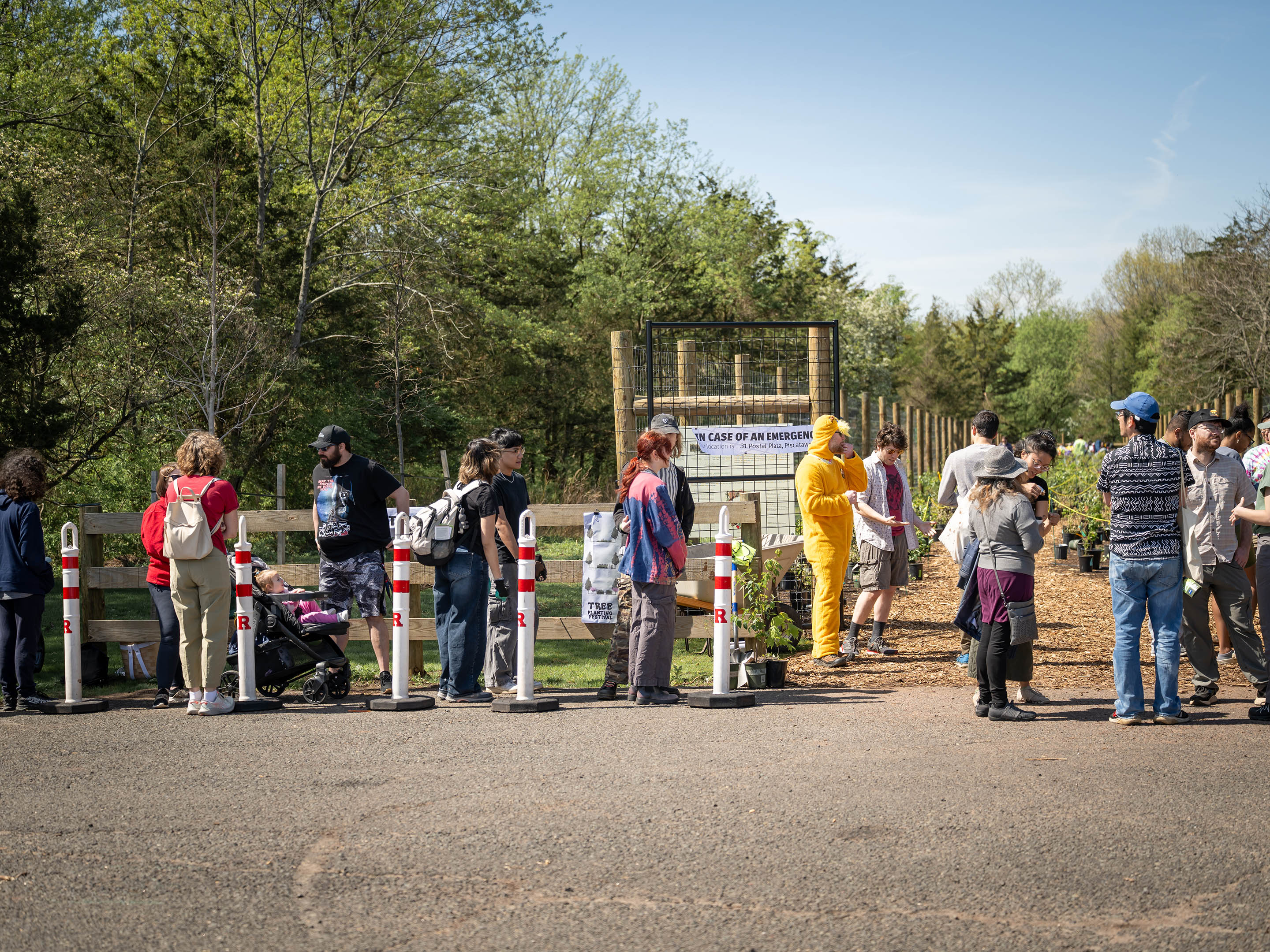
That vision came to life during the Rutgers Tree Planting Festival, a student-led, university-wide initiative designed not just to plant trees, but to bring people into the process. Held April 18, the festival drew more than 500 attendees, including students, faculty, staff, alumni and local residents, around a common goal: Plant 3,000 trees and, in the process, lay the foundation for a dense, fast-growing native forest.
“If I’d never attended the tree planting festival, I’d have thought that reforesting an area was an unfathomably difficult task that probably involved luck and the passage of thousands of years,” said Vikram Kadayan, who graduated from the Rutgers School of Arts and Sciences in 2025 with a degree in computer science. “One tree planting festival later, I learned it’s actually an approachable process that I got to be a part of. And all the while, I got to listen to great music, learn about the natural world around me and enjoy delicious empanadas.”
The event combined hands-on planting with music, art and opportunities to learn, reflecting what Kover said is a critical piece of climate work that is often overlooked.
Climate resilience isn’t going to come from a few institutions doing things right. It’s going to come from a lot of people understanding what they can do and being part of it.
Josh Kover
He added, “The goal is for people to learn something, feel a connection and have a good experience. If they walk away wanting to do this in their own communities, that’s where the real impact happens.”
While the forest design took years, the festival itself came together in a little more than a month, driven largely by Kover and Roslyn Dvorin, the urban forestry program outreach coordinator, with support from University Facilities.
“This only works because of the network here,” Kover said. “You can reach out to people across the university and make something happen pretty quickly.”
More than three dozen student volunteers helped organize the event, from logistics to outreach to designing materials aimed at reaching people well beyond environmental fields. The goal was to make the project accessible to anyone interested, regardless of background.
As the forest begins to take root, its long-term impact will unfold over years. The site is expected to become denser, more biodiverse and more resilient with time, while serving as a hub for research, teaching and public engagement.
Clemson said he’s already thinking about what the space will become.
“What I’m hoping to see is a forest that is diverse in its plant, insect, bird and animal communities. I want this to be an example of how to do something that has significant environmental benefits, but more importantly will be used as a resource to train future generations of landscape architects and other environmental professionals.”
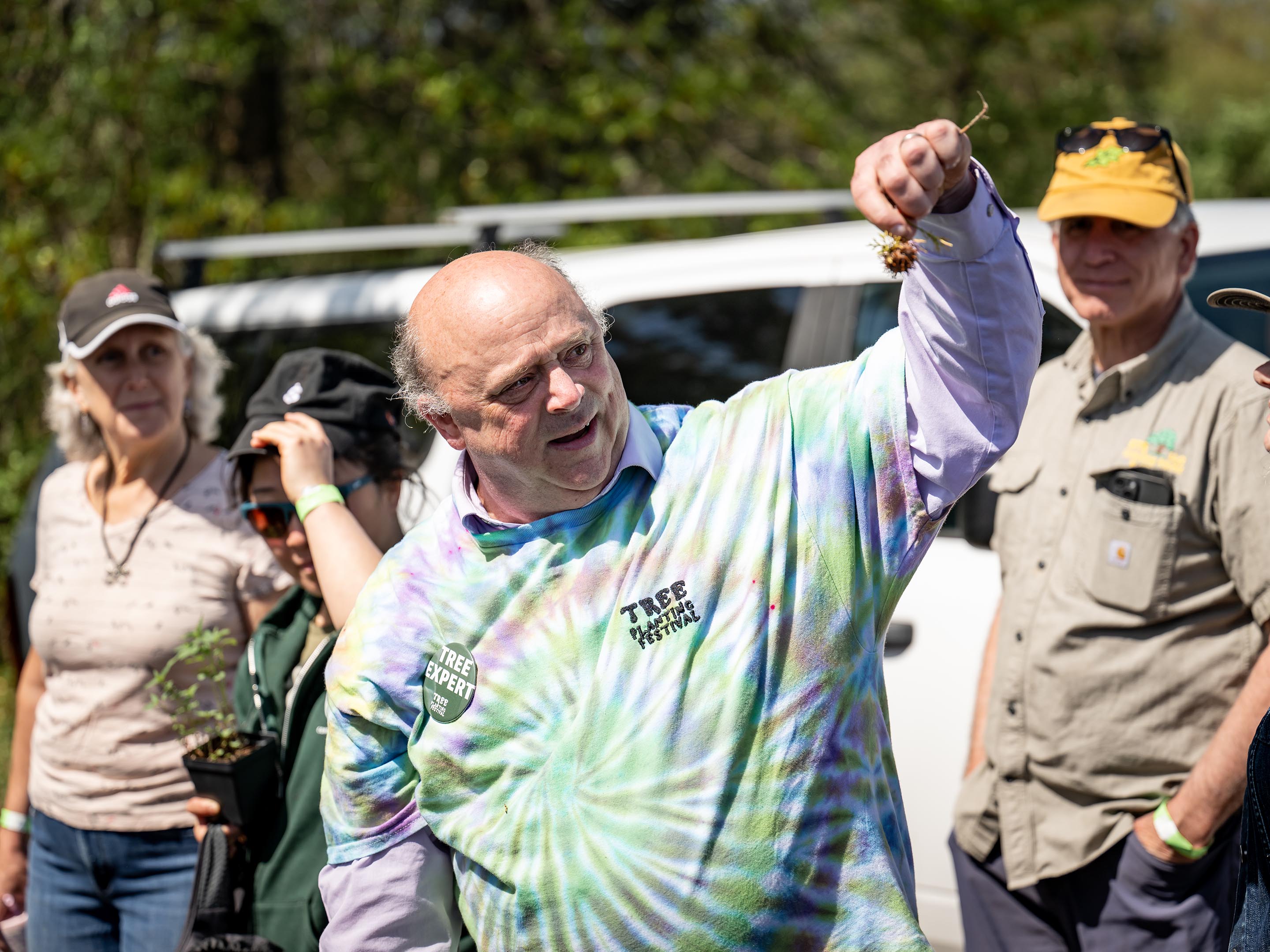
Scenes from the Rutgers Tree Planting Festival