Families faced with living in motels
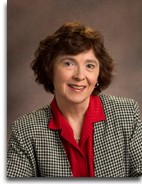
Carol Kaufman-Scarborough, a professor of marketing at Rutgers–Camden and the associate dean of the undergraduate program at the Rutgers School of Business–Camden, says those families are slipping through the cracks.
“Many times, these are families who were doing very well until one or both parents lost their job, or had a health problem, or a foreclosure,” Kaufman-Scarborough says. “The ‘one paycheck away’ problem probably could affect many people across the United States since the cost of housing is so far above the minimum wage.”
According to the National Center on Family Homelessness, a two-bedroom apartment at fair market value is out of reach for many. In fact, a full-time worker earning minimum wage earns on average only 47 percent of what they need simply to pay for that apartment, not counting food, clothing, and other necessities.
Kaufman-Scarborough draws attention to these displaced families with her paper, “The Hidden Rise of the Motel Families: Macromarketing Perspectives on the Hidden Homeless.” The paper calls for changes in public policy for the housing of families whose economic circumstances have made them homeless.
“Many of the people in these situations may be employed, it’s just that their wages are not enough to pay for an apartment plus utilities,” explains the Rutgers–Camden scholar. “They also want to keep their families together and provide education for their children. There is a significant lack of affordable housing.”
A look at statistics underscores the depth of the problem. The National Center on Family Homelessness indicates that one in every 50 children in America is homeless. In addition, a recent web-based seminar indicates that 956,914 homeless children and youth are enrolled in public schools throughout the United States. Filmmaker Alexandra Pelosi’s recent HBO documentary, “The Motel Kids of Orange County,” provides an inside look at the struggles these families endure on a daily basis.
Kaufman-Scarborough says there is a lack of uniformity of family policies for those affected by unemployment, underemployment, and failed mortgages. She notes motel families often are not eligible for various government programs since motels are considered to have a place to sleep.
However, the Homeless Children and Youth Act of 2011, proposed in January, would make motel families eligible for those programs if passed.
“Access to many appropriate services may be complex to find,” Kaufman-Scarborough says, and she adds that requiring online access and forcing families to travel through a maze of agencies for help are other pitfalls.
The Rutgers–Camden professor suggests programs in which social services representatives come to the families to allow them to interact with an agency without having to take time off from work, spend transportation and child care money, and eliminate some of the confusion when families are referred from one place to another. She says providing more affordable housing is another crucial step.
“Counseling for newly homeless families is needed to guide them to maintain their family stability and move towards regaining their well-being,” she says.
A noted expert on consumer marketing, Kaufman-Scarborough recently presented her research at the 2011 Macromarketing Conference in Williamsburg, Va.
Kaufman-Scarborough teaches courses on retailing, e-commerce, global marketing strategy, and consumer behavior.
The Cherry Hill resident received her undergraduate degree from Duquesne University, her master of business administration from Rensselaer Polytechnic Institute, and her doctorate from Temple University.
-30-
Media Contact: Ed Moorhouse
(856) 225-6759
E-mail: ejmoor@camden.rutgers.edu