The Next Generation of Ocean Explorers Chart 2026 Expedition
Early-career scientists at Rutgers lead an ambitious expedition to study ocean mixing and its role in sustaining life and regulating the Earth’s climate
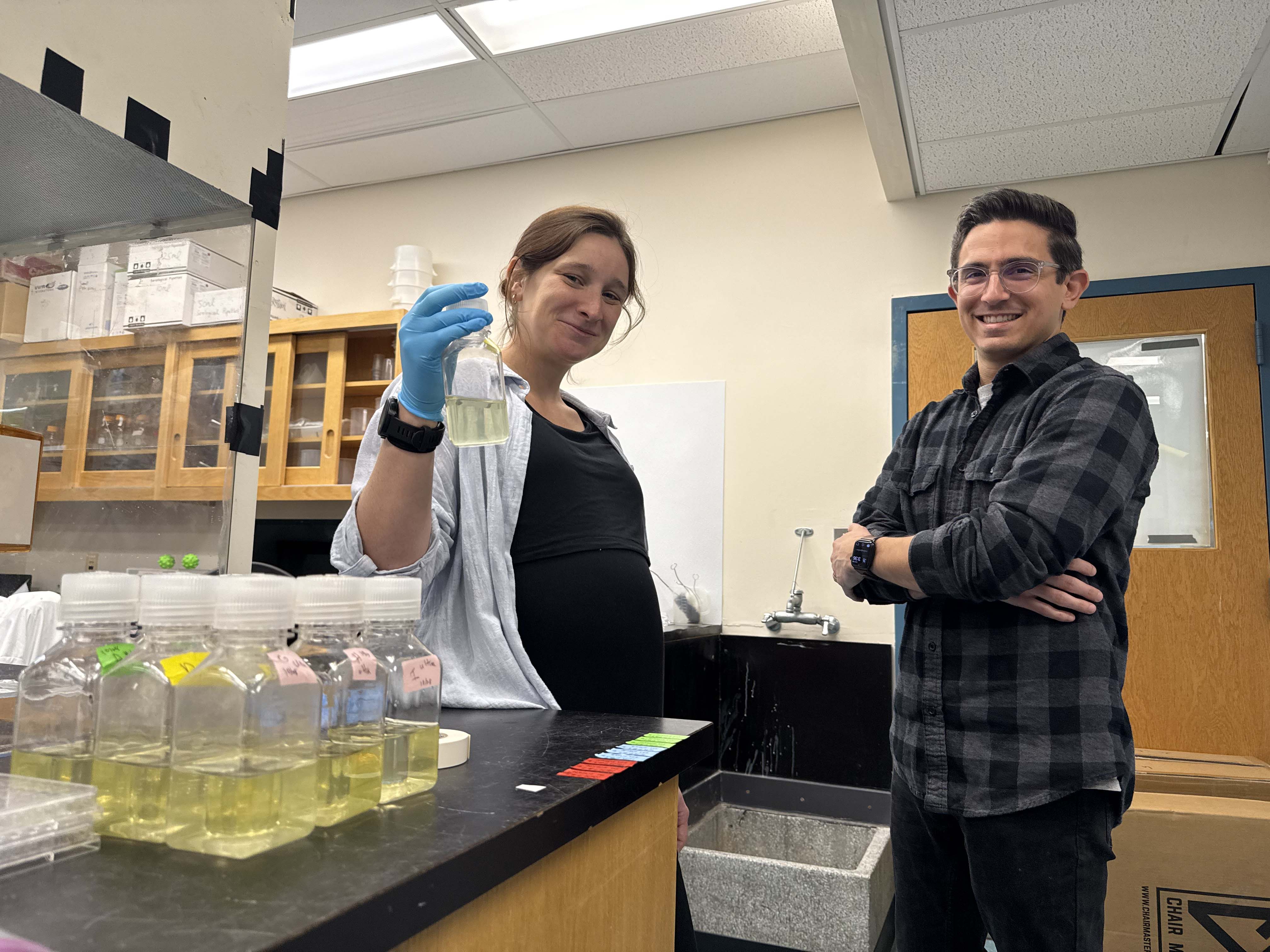
Long before they even leave port, Rutgers oceanographic research colleagues Joe Gradone and Corday Selden are thinking about their packing list.
It won’t include beach chairs and novels. They are planning for crates of sensors, autonomous underwater gliders, incubators and fragile instruments, one of which Gradone describes being “as delicate as a potato chip.”
These tools will help them probe one of the ocean’s most elusive processes. They are headed to sea to study salt fingering, an oceanic mixing phenomenon that could hold clues to the future of Earth’s climate.
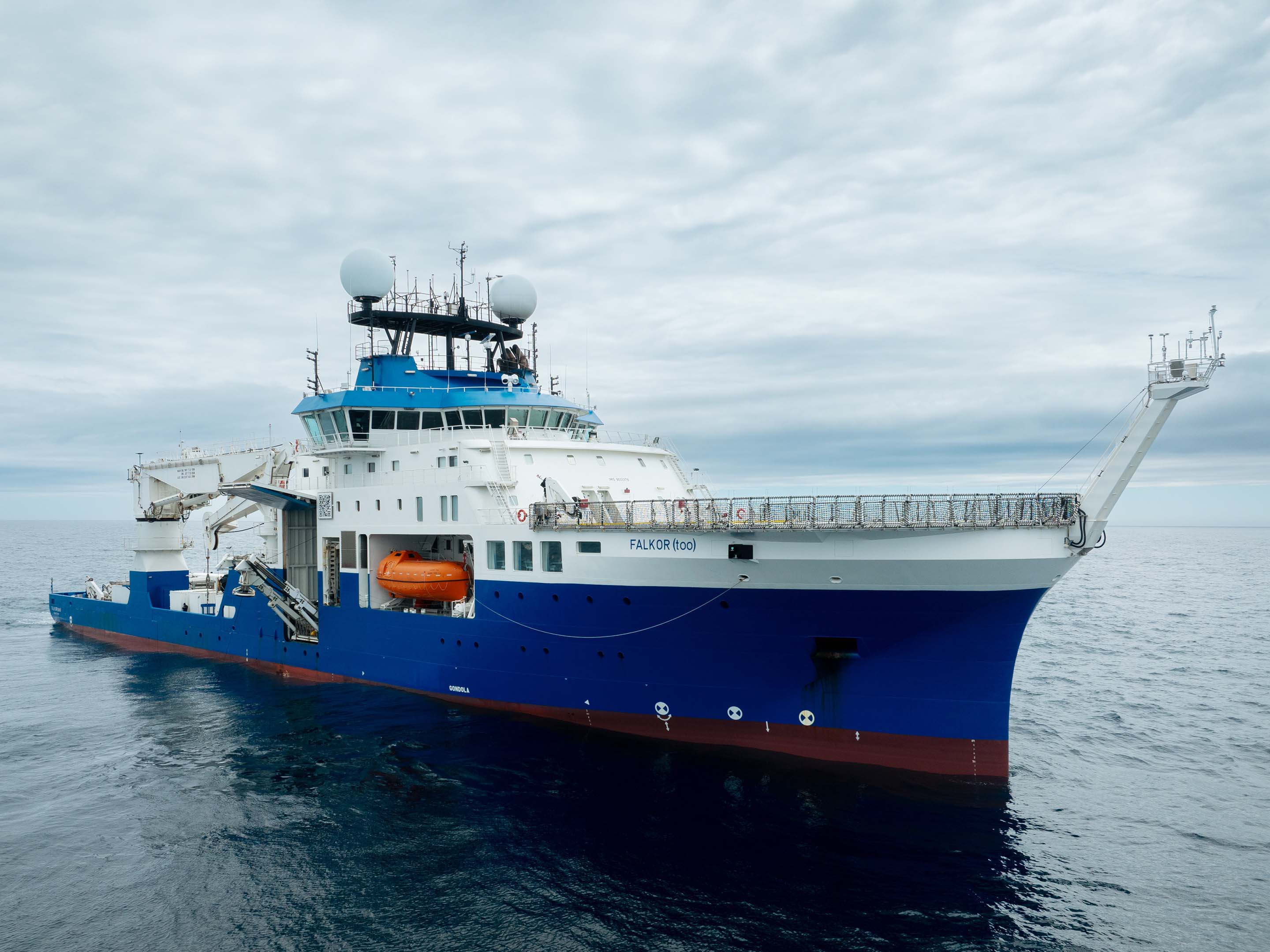
In August 2026, Gradone and Selden will lead a 28-day expedition aboard the R/V Falkor (too), a state-of-the-art research vessel operated by the Schmidt Ocean Institute.
Gradone is an assistant research professor, and Selden is an assistant professor in the Department of Marine and Coastal Sciences in the Rutgers School of Environmental and Biological Sciences. Together, their collaboration bridges physics and biology.
Gradone, an oceanographer focused on the physics of the oceans, is examining the mechanisms that stir the sea, while Selden, a biological oceanographer, is investigating the ecological and chemical consequences of that mixing. This interdisciplinary approach allows them to connect microscopic processes to global climate dynamics, making their partnership essential for understanding how a changing ocean impacts life on Earth.
“The way the ocean mixes controls everything from ecosystems to weather and climate,” Gradone said. “Warm water is fuel for a hurricane, for example. And this is a really fine scale mixing process that we don’t understand well.”
Understanding these dynamics is critical because ocean mixing influences phytoplankton growth, which drives the biological carbon pump. That critical mechanism removes carbon dioxide from the atmosphere. As climate change warms surface waters and alters circulation, nutrient delivery to the upper ocean may decline, reducing productivity and weakening this natural carbon sink.
“The amount of primary production, which is the amount of plant growth in the ocean, sets an upper limit on the amount of carbon the ocean can sequester,” Selden said. “That’s really important for regulating global climate.”
The R/V Falkor (too), a 363-foot ship with eight laboratories and one of the largest cranes on any research vessel, is a floating city of science. Schmidt Ocean Institute provides the vessel at no cost, making this cruise possible for an interdisciplinary team of early-career researchers from Rutgers and international partners. The scientific duo applied for the expedition through a highly competitive process.
During the mission, titled “Surveying Salt Fingering in the Caribbean,” the research team led by Gradone and Selden will explore the western equatorial North Atlantic, a hotspot for thermohaline staircases. These are layered aqueous structures where warm, salty water overlies cooler, fresher water. These conditions trigger salt fingering, a mixing process that moves heat, salt, and nutrients vertically through the ocean.
The researchers will deploy four autonomous gliders; a specialized instrument called a vertical microstructure profiler that rapidly descends through the water column; and an automated microscope known as an Imaging FlowCytobot, a device capable of photographing individual phytoplankton cells.
The scientists also will use a Conductivity, Temperature and Depth (CTD) rosette system, which is a carousel of sampling bottles lowered into the ocean measuring salinity, temperature and water depth and collecting water at specific layers.
“We’re chucking our toys in the ocean, intentionally, of course,” Gradone said with a smile.
Each instrument serves a purpose. Gliders map temperature, salinity and currents. The profiler measures turbulence. And the cytobot device reveals the microscopic life that underpins the marine food web.
The instruments will help scientists answer two big questions. First, they will analyze whether salt fingering has intensified as subtropical waters become saltier and deeper subpolar waters fresher. They also will examine whether this mixing phenomenon delivers enough nitrogen to boost phytoplankton growth and carbon export.

For Gradone and Selden, the cruise represents a scientific milestone and a career-defining moment.
“It’s unusual for people at our career stage to be chief scientists on a voyage like this,” Gradone said. “We don’t take that lightly.”
They’re also committed to making the expedition inclusive: The science party of 24 researchers will involve students from Rutgers and partner institutions in Barbados, Brazil and Sweden. Members of the science party are individually responsible for covering salaries, as well as travel and shipping costs.
Named after the “luck dragon” in the fantasy novel and movie The NeverEnding Story, the R/V Falkor (too) is also meant to be a symbol of hope and functions as a global research platform. The vessel is state-of-the-art, with eight labs, advanced sonar systems, and high-performance computing.
The Schmidt Ocean Institute, founded by Eric and Wendy Schmidt, supports ocean science by providing researchers with advanced tools and ship time at no cost, with its flagship vessel, R/V Falkor (too), playing a central role. The institute’s research funding model has supported more than 1,000 scientists worldwide.
In the coming months ahead of the August 2026 launch, Gradone and Selden will finalize logistics. They will ship containers of gear to the Caribbean. They will coordinate acquiring international permits. They also will complete recruiting their team.
As Gradone and Selden see it, when the R/V Falkor (too) heads out of port from Trinidad heading toward the equatorial North Atlantic off Barbados, it will carry scientists and their instruments, and the promise of answers to questions that ripple from the deep ocean to the global climate system.
“We’re studying one type of physical mixing that we think may be important,” Selden said. “We don’t understand it very well, and it doesn’t tend to be thought about when we think about nutrient delivery on a global scale. This cruise is our chance to change that.”
Explore more of the ways Rutgers research is shaping the future.