The Rutgers Board of Governors took the following actions at its April 13, 2007, meeting:
Honorary degree recipients The board approved the granting of eight honorary doctoral degrees during this year’s commencement ceremony. This year’s recipients include:
- Commencement speaker Tavis Smiley. Saluted among the most promising young leaders in America by Time and hailed by Newsweek as one of the “20 people changing how Americans get their news,” Tavis Smiley is a broadcaster and political commentator, best-selling author, talk show host, philanthropist, and a strong voice for social change. He is the first American ever to concurrently host signature talk shows on both public television and public radio. Smiley was executive producer and host of the current affairs program BET Tonight with Tavis Smiley on Black Entertainment Television and became the first African- American to host his own talk show for National Public Radio. That success was followed by the launching of his PBS television program, Tavis Smiley. Working with Joyner, Smiley developed and hosts The State of the Black Union, C-SPAN’s series of town hall meetings about issues affecting the African-American community. Later this year, Smiley will bring to the air two unprecedented prime-time debates in which the presidential candidates of the major parties will discuss issues of concern to African-American voters. Smiley has authored or edited several books on economic and social empowerment, including The Covenant, a series of essays by black scholars, activists, and political figures that became a political phenomenon and reached No.1 on the New York Times Best-Seller List without mainstream exposure. In 1988, Smiley founded a communications corporation dedicated to human rights and empowerment issues. His self-named foundation works to enlighten, encourage, and empower African-American youth through the development of leadership skills. His philanthropic work has resulted in the establishment of schools for communications and professional media studies at Texas Southern University, ongoing scholarships to African-American high school and college students, and other charitable contributions.
- Joan Bildner, who served for 12 years on the Rutgers Board of Governors and Trustees and is currently a member of the Rutgers Board of Overseers. Bildner and her husband, Allen, were owners of Kings Supermarkets and SME Co., a family management and investment firm. The Bildners founded the Allen and Joan Bildner Center for the Study of Jewish Life at Rutgers, which has stimulated the development of Jewish studies and promoted scholarship, research, public education, and reducing prejudice worldwide. To date, the Bildners and their foundation have supported more than 20 different initiatives at Rutgers, including the Paul Robeson Cultural Center, the Jane Voorhees Zimmerli Art Museum, and the Institute on Ethnicity, Culture, and the Modern Experience. Joan Bildner served for 12 years on Rutgers’ Board of Governors and Board of Trustees, and in June 2006, she was elected a Rutgers Trustee Emerita in recognition of her distinguished service. She is currently a member of the Board of Overseers of the Rutgers University Foundation.
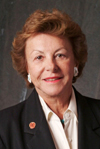
- Donald T. DiFrancesco, the 51st governor of New Jersey and longtime member of the New Jersey State Senate. DiFrancesco’s career in public service began with his election to the New Jersey General Assembly in 1975. He was elected to the Senate in 1979 and was chosen in 1992 to serve as Senate President. Following the January 2001 resignation of Governor Christine Todd Whitman, DiFrancesco became the first New Jersey legislator since the 1947 State Constitution to serve in the dual role of Governor and Senate President. He provided New Jersey with outstanding leadership, particularly during the difficult period following the terrorist attacks of September 11, 2001.
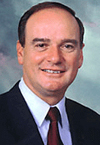
- Shirin Ebadi, Iranian lawyer and human rights activist. A Nobel Peace Prize recipient, Ebadi began her career in the 1970s as Iran’s most accomplished female jurist. . In 1975, she became president of the city court of Tehran, the first woman in Iranian legal history to head a legislative branch. Following the Iranian Revolution in 1979, she was forced to resign her position when conservative clerics insisted that judgment by women is forbidden in Islam. She eventually established a law practice, taking on many politically sensitive cases that few other Iranian lawyers were willing to touch. Jailed in Iran herself on a number of occasions, Ebadi is known throughout her country and the world for her defense of victims of the Iranian conservative faction’s attack on free speech and political freedom.
- Albert R. Gamper Jr., outgoing chairman of the university’s Board of Governors and a 1966 graduate of Rutgers’ University College–Newark. While a student at Rutgers, Gamper worked at Manufacturers Hanover Trust Company and rose steadily up the corporate ladder. In 1987, he was chosen to serve as chairman and chief executive officer of the CIT Group, Inc. His leadership helped the firm become one of the nation’s largest commercial and consumer financing companies. He retired as chairman of the board of CIT in 2004. Citing his Rutgers degree as a key to his success, Gamper translated his gratitude to his alma mater into a $1 million gift, matched by CIT, to endow a chair at Rutgers Business School–Newark and New Brunswick. Gamper began his board service at Rutgers on the Board of Overseers of the Rutgers University Foundation in 1993 and was elected to the Board of Trustees the following year. He was appointed to the Board of Governors in 1996 and became chairman in 2004.
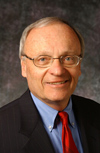
- The Rev. Father Edwin D. Leahy, who began his career as a teacher at St. Benedict’s Preparatory School in Newark in 1967. The monks of the Newark Abbey had educated boys at St. Benedict’s since 1868, but by the early 1970s, waning enrollment, declining student achievement, and financial difficulties forced operations to be suspended. Father Edwin was appointed headmaster with a mission to lead efforts to reopen the school. Under his energetic and charismatic guidance, St. Benedict’s reopened in 1973 with 89 students, 14 faculty members, and renewed determination to ready young men from the Newark area for higher education and productive careers. Students soon found that Father Edwin had set high standards of personal discipline, social responsibility, and moral integrity. Today, 34 years after its new beginning, St. Benedict’s is flourishing. Its enrollment has grown to 584 students, most from economically disadvantaged backgrounds, and there are 67 faculty members.
- Gordon H. Sato, accomplished research biologist. A lifetime of achievement in the sciences helped prepare Sato for one of the most rewarding projects in his life: cultivating mangrove trees along the coast of Eritrea, a drought-stricken African nation. There, in one of the world’s poorest and driest nations, sustainable, affordable agricultural practice is a constant struggle, and famine is frequent. Sato recognized that mangrove trees, already growing along some of the country’s coast, could be made to tolerate and even flourish in the brackish tidal wash of coastal Eritrea. Beginning in 1988, Sato and his nonprofit Manzanar Project—named after the camp in which he, his parents, and many other Americans of Japanese ancestry were interned during the early days of World War II—have planted thousands of mangroves. The leaves of the plants provide fodder to raise enough animals to feed several thousand people. Since 1988, Sato has invested more than $500,000 of his own money in the Manzanar Project.
- Eugenie C. Scott, a physical anthropologist and internationally recognized advocate of scientific literacy. Scott is the founding director of the National Center for Science Education, established in 1987 to defend the teaching of evolution in public school science classes. She is a Fellow of the American Association for the Advancement of Science and a former president of the American Association of Physical Anthropologists. She is a leading expert on creationism – including intelligent design – and one of its strongest critics. Deeply committed to the separation of church and state, she believes that while instructors must respect their students’ religious views, science and evolution are not de facto antireligious, and schools should only allow science to be taught in science classes. One of her most visible recent efforts has been the six-year fight against the Kansas State Board of Education’s decision to remove evolution from that state’s testing standards.