Valve Trials Cement Rutgers Health and Robert Wood Johnson University Hospital as Global Leaders in Cardiac Innovation
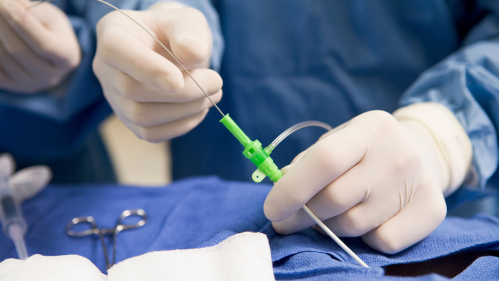
Before 2012, fewer than 100,000 Americans per year underwent surgery to replace a failing heart valve. Today, more than 250,000 patients benefit from heart valve replacement therapies annually.
This dramatic shift isn't because more people are getting sick: It is because a decade of innovation has finally provided life-saving treatment options to patients who previously had none.
In a major validation of this new era, three landmark studies undertaken across many of the world's leading cardiac programs, including Rutgers Health, all involving patients from Robert Wood Johnson University Hospital (RWJUH), an RWJBarnabas Health facility, were published in The New England Journal of Medicine and The Lancet. Together, these trials validate catheter-based treatments across the full spectrum of valve disease, effectively closing the gap for many patients who once had no treatment option.
“Until now, less invasive catheter-based therapies were mostly limited to a single condition – narrowed aortic valves,” said Mark J. Russo, chief of cardiothoracic surgery at Robert Wood Johnson University Hospital, professor of surgery and chief of cardiac surgery at Rutgers Robert Wood Johnson Medical School. “These studies demonstrate that we now have a full toolbox. We can offer both catheter-based, as well as surgical, options for the full spectrum of valve disease, from the aortic to the mitral and tricuspid valves.”
A Seat at the Global Table

The rapid-fire publication of all three studies over a 30-day span late last year reflects a massive, decade-long effort that has positioned Rutgers Health and RWJUH among the most highly rated cardiac programs in the world. RWJUH ranked among the highest-enrolling sites for all three trials, and Russo served on the leadership committee for each – one of a small group of investigators nationally who helped shape trial design alongside the field's leading figures.
“Sustaining that level of enrollment and quality simultaneously across multiple trials reflects the dedication of a world-class team,” Russo said. “While the headlines appropriately focus on the important findings, behind every data point is an 'invisible army' of proceduralists, cardiac imagers, intensivists, research coordinators and data analysts who have managed hundreds of patients across dozens of clinical trials over the past ten years.”
Closing the Treatment Gap
For years, clinicians faced an agonizing reality – a population of patients too sick for open-heart surgery but without viable alternatives. The new data changes that.
For low-risk patients (aortic stenosis): Trial results in The New England Journal of Medicine followed 1,000 relatively healthy patients with severe symptomatic aortic stenosis who were randomly assigned to either open-heart surgery or transcatheter aortic valve replacement. After seven years, researchers found no significant difference in death, stroke, or rehospitalization: 34.6% in the group and 37.2% in the surgery group.
Both procedures deliver excellent long-term outcomes. The difference lies in recovery. Open surgery typically requires a chest incision, time on a heart-lung machine, several days of hospital care, and weeks of limited activity. The nonsurgical procedure is performed through a small puncture in the groin, and most patients leave the hospital after one night.
“This validates TAVR not just as a 'rescue' therapy, but as a premier option for active, healthy adults – and further confirms that patients with this potentially survival-limiting condition have two great treatment options,” Russo said.
For leaky valves (aortic regurgitation): A second study in The Lancet tested a device specifically designed for "leaky" aortic valves that lack the calcium needed to anchor standard devices. Until recently, open-heart surgery was the only effective treatment option. Many patients too weak for surgery had to accept inferior care with medication alone.
The study shattered performance targets – death from any cause was reduced by nearly 70% versus the prespecified one-year target of 25% – offering a lifeline to patients who previously had none.
For complex mitral disease: The third study, also in The Lancet, moved the catheter approach to a different valve – the mitral valve, which separates the heart's main pumping chamber from the left atrium. When the mitral valve leaks badly, a condition known as mitral regurgitation, blood sloshes backward into the lungs and patients can become severely short of breath. Many are older and too sick for open-heart surgery. Others don't have the right anatomy for transcatheter edge-to-edge repair, in which doctors clip the valve's leaflets together.
The trial enrolled 299 patients who were unsuitable for traditional surgery or edge-to-edge repair and provided them with a new transcatheter mitral valve replacement system. The 30-day mortality was nearly 90% lower than the expected 6.6% surgical mortality based on risk scores. At one year, the composite of all-cause death and heart failure hospitalization was about 40% less (25.2%) versus the 45% performance goal.
Russo called the device design “brilliant but a little bit complicated” and said the complexity of the procedure would limit it, at least initially, to specialized academic medical centers such as RWJUH. In fact, while the therapy was recently approved by the Food and Drug Administration for wider application, initially RWJUH will be one of only 20 sites in the U.S. able to offer it to patients.
A Legacy of Bravery
Russo said the true pioneers of this decade-long effort are the patients themselves.
“These results reflect the courage of patients who enrolled in investigational trials when conventional options were insufficient,” Russo said. “Their willingness to undergo these novel therapies not only saved their own lives, it opened the door for the hundreds of thousands of people who will benefit from these technologies today and in the future.”
With these validations complete, RWJUH continues to lead the region and the nation, offering patients access to life-saving therapies years before they become widely available elsewhere.
“Three important heart valves get diseased in adulthood,” Russo said. “For the first time, we can successfully treat all of them without opening the chest.”


