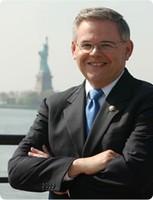
Kyrillos remains virtually unknown to most voters two months before Election Day; three-quarters say they have no opinion or don’t know him while 15 percent have a favorable impression and 10 percent are unfavorable. Menendez, on the other hand, is viewed favorably by 40 percent and unfavorably by 28 percent. Twenty-six percent are unsure and 7 percent don’t know who he is.
“Senator Kyrillos is fighting an uphill battle for attention against a well-funded incumbent in a blue state,” said David Redlawsk, director of the Rutgers-Eagleton Poll and professor of political science at Rutgers University. “His first TV ads started right after we polled, so the lack of awareness is not overly surprising. Still, he has a long way to go to get voters’ attention.”
New Jersey voters will also weigh in on a $750 million education bond to be used for new academic buildings and technological upgrades at colleges and universities. Likely voters approve of the measure 56 percent to 27 opposed. The remainder is unsure.
Results are from a poll of 916 registered voters conducted statewide among both landline and cell phone households from Aug. 23–25, just prior to the party conventions. Within this sample, 688 respondents are identified as likely voters in the U.S. Senate election and are the subjects of this release. The likely voter sample has a margin of error of +/- 3.7 percentage points.
Kyrillos unknown by many, including supporters
In the Senate race, Kyrillos faces a likeability deficit, largely because few know enough to render an opinion, even within his

Perhaps providing an opening for the challenger, coveted likely independent voters are split in their assessment of Menendez; 36 percent are favorable, while 32 percent are unfavorable. Only 6 percent say they don’t know him and another quarter offer no opinion. But, Kyrillos’ own numbers lag with this group as well: 77 percent of independents have no opinion of him.
Head-to-head, 88 percent of Democrats back Menendez and 76 percent of Republicans back Kyrillos despite weak recognition within his own party. This 12-point gap is significant for Menendez, especially since independents lean toward the incumbent, 39 percent to 34 percent.
“As we noted earlier this year, Kyrillos’ biggest challenge is simply getting known,” said Redlawsk. “While Menendez’s favorability has improved, Kyrillos has been stuck. Independents are not sold on Menendez, so Kyrillos may have an opportunity, especially if he can improve his base support.”
The candidates are in a dead heat among men at 41 percent each, while women overwhelmingly support Menendez, 53 percent to 28 percent. Kyrillos has a small edge, within the margin of error, among white voters (by six points), Catholics (three points), exurban voters (five points) and those “falling behind” in their personal finances (three points). Partially reflecting his residence in Monmouth County, likely voters in shore counties support Kyrillos over Menendez, 55 percent to 30 percent. He also leads by 25 points among voters who say the state is going in the right direction.
Menendez holds strong leads in traditional Democratic urban and south Jersey counties and among those who say the state is on the wrong track. He also holds large leads among those with the least and the most education.
Few have heard about education bond issue
Two months before the election, 55 percent of likely voters have heard nothing about the proposed $750 million higher education bond. Another 37 percent say they have heard “only a little,” while 8 percent have heard a “lot.” Despite lacking information, 56 percent say they will vote for the bond, while about a quarter will not. In a February Rutgers-Eagleton Poll, during early discussion of the issue, only 48 percent of registered voters supported the proposal, while 45 percent opposed it.
Support for the bond increases with awareness, Redlawsk said. Two-thirds of those who have heard “a lot” will support it, compared to just over half of those who have heard nothing.
“One reason for increased support is that originally, the talk was about a bond for more than $1 billion,” said Redlawsk. “Keeping it below that level seems important, and even though voters with little information seem willing to buy in, the more they hear, the better they like it.”
Support is strongest among likely Democratic voters (76 percent support), while 47 percent of independents and 42 percent of Republicans say they will vote for the measure.
Support increases with the level of voter education. Fifty-nine percent of those with post-graduate level education are in support, compared to half of those with a high school degree or less. Support decreases with age: 75 percent of voters under 30 favor the bond, while only 49 percent of those 65 and over agree. Black voters (74 percent) are much more likely than whites (51 percent) to say they will vote for the bond issue, but across all demographic groups, support outpaces opposition. Regionally, only voters living in the shore counties are dubious. The bond issue is essentially tied there, 41 percent in favor to 42 percent against.
Support increases with the level of voter education. Fifty-nine percent of those with post-graduate level education are in support, compared to half of those with a high school degree or less. Support decreases with age: 70 percent of voters under 35 favor the bond, while only 49 percent of those 65 and over agree. Black voters (74 percent) are much more likely than whites (51 percent) to say they will vote for the bond issue, but across all demographic groups, support outpaces opposition. Regionally, only voters living in the shore counties are dubious. The bond issue is essentially tied there, 41 percent in favor to 42 percent against.
Media Contact: David Redlawsk
732-932-9384, ext. 285
E-mail: redlawsk@rutgers.edu